Ok, on to our day!
Today was the first day we were able to visit a German school! We started our morning by visiting the JFK School. This is a German-American bilingual school that accepts both German students but mainly serves American students whose parents are in the military, work for the embassy, are living in Germany, etc. It is a K-12 school and was really, really fascinating to visit.
However, that being said. I am going to preface this description by stating right out, the JFK School is basically a charter school. It is application based, has highly motivated and involved parents, few resources for students with disabilities, and less than 20% of the students are low income or struggle academically.
I believe that in the current US system, and NC in particular, most charter schools are exclusionary and a form of modern day segregation. When you do not provide transportation, free and reduced lunch opportunities, or classes/resources for students with disabilities, you are automatically setting up a system that is inaccessible to low income (and often minority) students. Even when these resources are provided, low income families do not often have the time, knowledge, or experience to seek out these opportunities or navigate the school of choice world. Add in to that charter schools that are run by for profit companies or ineffective boards and you have these schools getting public funds not being held accountable to the same standards as public schools.
I say all of this to help people take the information about the JFK School with a grain of salt. Yes, their school is amazing. There are things we can learn from them and maybe even take back to the states, but it is not a representation of an average German school.
Disclaimer over!
So we started our day at the JFK School speaking with the managing director (he is one of 4 principals elected by the group to be the managing director). Fun fact: all of the principals still have to teach at least 6 hours/week!! The school is completely bilingual and we definitely witnessed this! The kids start at the school in the Entrance Class. This class is a mix of both German and American children. Everything is said in both German and English (this continues for two more years). Once they hit 3rd grade reading/writing classes are conducted in their Mother Tongue and they also get language class in, what they call, their Partner Tongue. Science, Social Studies, Math, and Music are all mixed language. We observed a discussion in a 4th grade Social Studies classroom that started in German and midway switched over to English. Both the kids and teacher switched effortlessly between languages!
The number one thing I noticed at that school is how normal everything was. It could have been any school in the US.


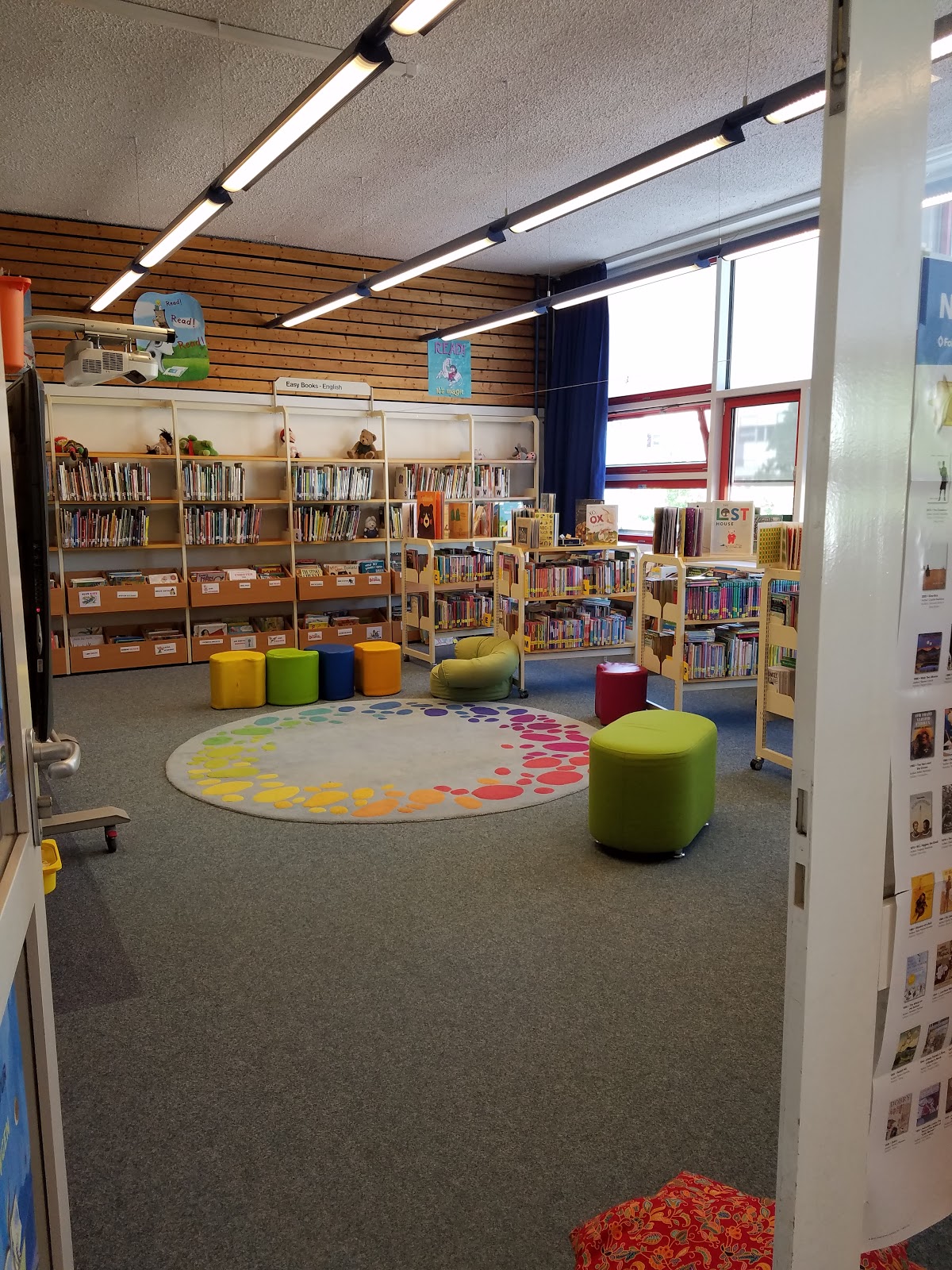
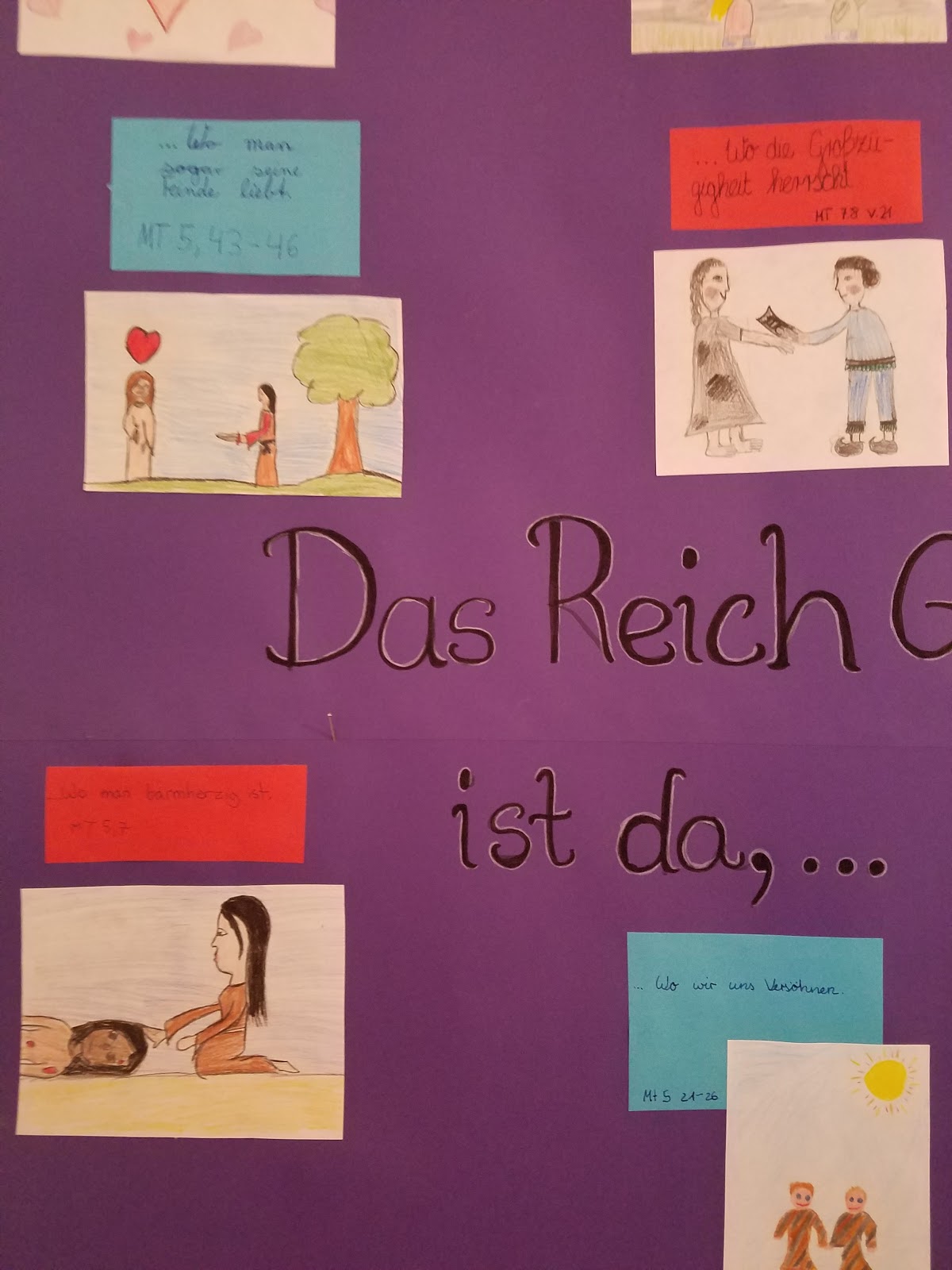
We kept saying, “kids are kids are kids”. Many of the school projects hanging on the wall were things that would fit right in back home (some I’m even going to share with my teachers for ideas!).




The other thing I noticed was how little technology there was. Each classroom had a projector and a Smartboard but very few classrooms had computers and those that did only had two or three. The principal stated that that is not a huge priority for them right now because they don’t believe that technology should replace the teacher and technology won’t just be an easy fix. While I agree with those statements, it definitely sounds like they have not embraced many of the ideas around digital learning.
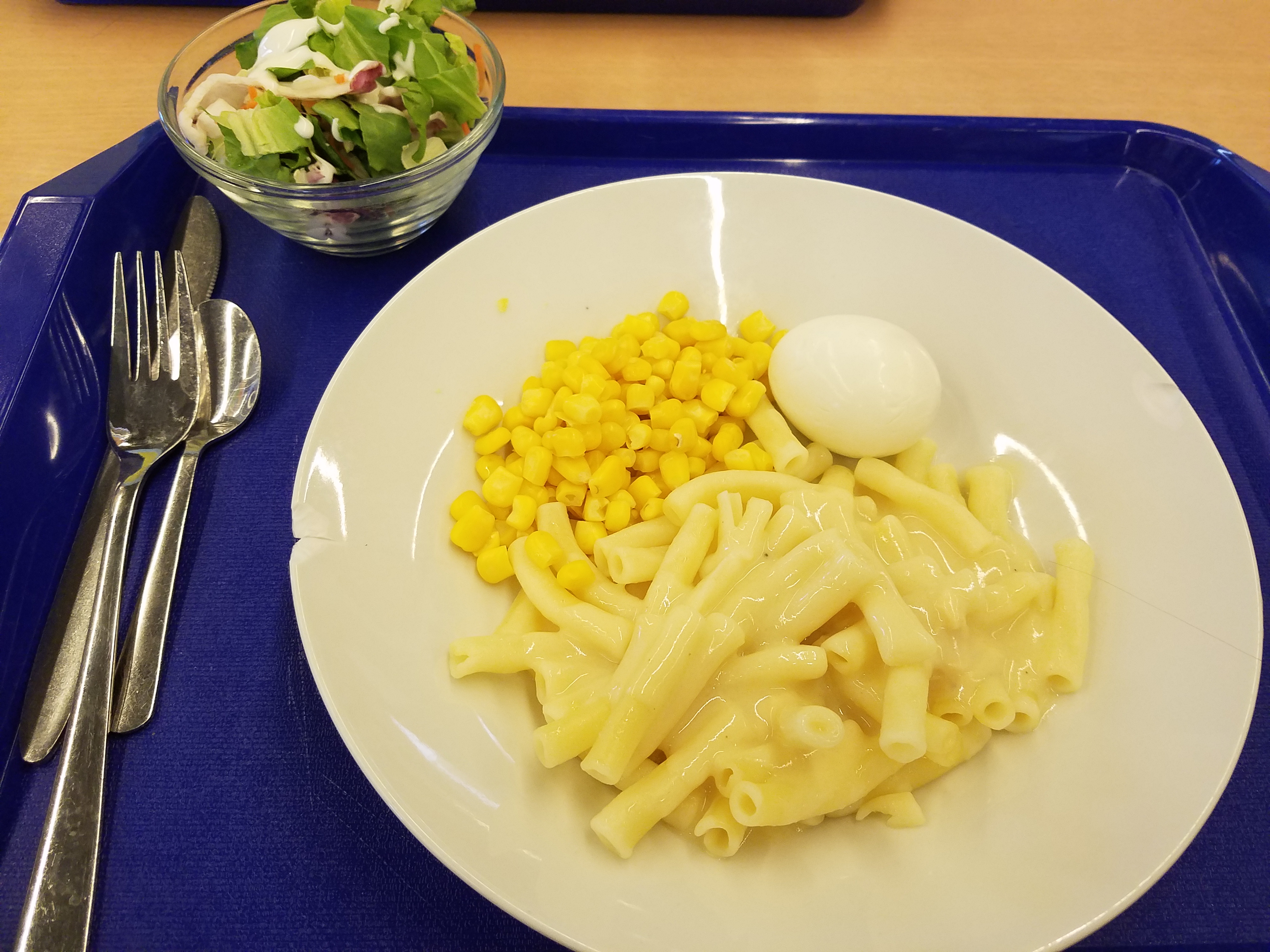
We ended our visit at the school by eating lunch in the cafeteria with the kids (we were there while 4th -6th ate). Lunch was freshly cooked, though many students chose to grab a sandwich or wrap from the little snack counter. Everyone used real plates, glasses, and silverware! Students came into the cafeteria, ate lunch, and then went outside to play. ALL ON THEIR OWN. Let me emphasize that. There was one adult floating around the cafeteria, but the kids all came in and sat wherever they wanted, bussed their own trays, and went outside with no direction! I wish we had been able to stay long enough to see the primary grades eat. They were putting out all of the plates and silverware on the tables for them when we left.
During the afternoon we visited Humboldt University to talk with some of their staff about the initiatives they’ve implemented to provide university studies to immigrants and refugees. It’s really disgusting we don’t have the same mentality about trying to welcome and integrate those coming to the US. We also were presented information about multilingual education in Germany.
The evening was spent walking around Berlin, visiting a German bakery and doing a little souvenir shopping. Afterwards I got to do a Google Hangout with a 4th grade class and had so much fun with them! They asked a TON of really, really good questions and I was so excited to share this trip with them. It went so well, we’re going to try for one more time before I go home!
Tomorrow is an early day. 5 am departure for the airport to fly to Stuttgart. It will be interesting to fly to a different region and see how it differs from Berlin (Brandenburg), Germany.